
What is the reason Solar Energy is important?
What is the reason Solar Energy is important?
The potential of solar energy to address many of the global challenges is the main source for renewable energy. There are many reasons that allow solar energy to be promoted in the energy industry. Because it’s flexible and provides numerous benefits to people as well as our environment, the energy source is growing in popularity.
What exactly is solar energy?
Sunlight is what gives rise in solar energy. The sun is the source of power for our planet. It provides the energy necessary to protect our environment and increase our population, irrespective of whether or not you realize it or not. Sun’s power is enough to supply all our needs. The US Department of Energy estimates that 173,000 terawatts of sun energy hit the earth every second, over 10,000 times more than the total global energy consumption. We can use the sun to produce electricity that is free clean, renewable, and sustainable. Solar energy can be used to provide heat, light, and other electricity-dependent needs in homes and buildings.
Environmental Protection is vitally important
As per the U.S. Department of Energy the amount of sunshine Earth receives in one hour is higher than the energy that is consumed by the entire world for a year. Bloomberg reports that solar power was the fastest-growing energy sector in 2015, with a 33% increase. Promoting solar energy is driven by its environmental advantages.
Solar energy is safe and clean.
The most secure alternatives to fossil fuels such as coal and gas is solar. Solar power can generate electricity that produces air polluting soil, water and air. It is reported by the World Wide Fund For Nature (also known as the WWF) notes that fossil fuels may cause pollution of the air, acid rain, damage to forest areas, and impact agricultural production which can result in a cost of billions USD around the world. In the United States, fracking United States uses thousands of liters of water to extract water. This can also cause earthquakes and contamination of nearby water bodies. Environmental disasters generated by nuclear energy have caused water and land pollution. The harmful and unclean consequences of burning fossil fuels will be eliminated through the use of solar power.
Habitat destruction prevented
To extract the raw materials like fossil fuels or nuclear fuels, precious forests are cut down. To feed their families trees continually remove carbon dioxide from the atmosphere and store it in their forests. This important carbon sink gets destroyed when forests are cut to mine the raw materials needed for conventional energy. Also, it contributes to the climate change. According to WWF 8 out of ten animals living on land live in forests. Loss of habitats for forests can lead to a decrease in their numbers. It is essential to convert to solar power to preserve these habitats for animals that live there and also to ensure clean air.
Climate Change Combated
Based on the Environmental Protection Agency, 2017 greenhouse gas emissions were 13 percent less than the levels of 2005. In reality, carbon dioxide emissions from greenhouse gases actually decreased by.5% between 2016 and 2017. Global warming and changing weather patterns are all triggered by emissions. Temperatures rising and an increase in the number of pests that spread disease can result in serious health problems, especially for the elderly and children.
The alteration of weather patterns has resulted in increased floods as well as hurricanes due to climate changes. The increase of carbon dioxide is acidifying oceans, and killing marine life , such as corals. Climate change is leading to the destruction of species from the Sub-Arctic Boreal forest and Amazon forests. Amazon forests. The melting of the polar ice cap leads to a reduction in the habitat for wildlife along with an rise in sea levels. People are displaced by the disappearance of the coastlines. Globally, irregular rainfalls or growing droughts may affect agriculture and the livelihoods of the less fortunate groups of society.
Because solar power does not produce carbon dioxide emissions, it could slow the impact of climate changes. According to Greenpeace myth 5, (report on myths about energy) solar panels are able to reduce carbon emissions within as little as four years.
Social and Social Benefits
Based on the Solar Energy Industries Association, the U.S. had an installed capacity at 69.1 gigawatts (GW) which is enough to power over 13 million homes in the second quarter 2019.
Sources of small and decentralized electric power
The greatest appeal of solar energy is its capacity for production on a smaller scale by the consumer instead of traditional energy sources that are controlled centrally by big corporations.
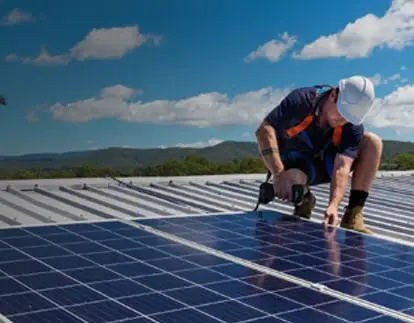
Photo-voltaic cells mounted in the rooftops of individual buildings can generate electricity and heat from solar energy. As per the U.S. Energy Information Administration (EIA) the solar energy is a decentralized source for energy that is utilized by households and businesses. According to the National Renewable Energy Laboratory, there are passive solar designs for structures that cool or heat spaces as well as the solar power of water heating.
These systems are getting more popular for power generation at community levels. In the report of the Office for Energy Efficiency and Renewable Energy’s analysis 13 states had 100 megawatts of power generation in 2015. The residential units produced 2 gigawatts. Between 2010 between 2010 and 2015, 100 MW of community solar facilities were built. These are crucial to ensure that communities continue to operate at less cost.
EIA also says that large-scale “Solar thermal/electric plant plants generate electrical energy by condensing sunlight into heating an oil-based fluid and producing steam to power generators.”
Because solar power is decentralized It can be utilized in remote locations that are disconnected from the grid. This is vital for farms that operate greenhouses, irrigation, and hay dryers. As per the Union of Concerned Scientists, this makes agriculture safe.
Affordable and reliable energy source
The high cost of solar panels have been reduced through technological advancements, government subsidies and policy. According to Energy.gov the cost of solar solar systems have fallen by 60%, and the price of solar power systems has decreased by half. It is competitive with traditional energy sources.
According to Greenpeace that the operating costs are lower and an initial capital investment can be recouped leading to savings on energy costs. According to Greenpeace’s myth-busting research (myth 1) solar energy utilizes sunlight and is cost-free. Yet, fossil-fuels have to be mined and transported over long distances. In accordance with the Greenpeace report, in the United States, the costs of dealing with environmental issues from using “dirty energy sources” are twice or more than the cost of electricity from traditional sources like coal. These extra costs can be eliminated or offset by solar power.
Generation of Jobs
Guardian states that United States was the fifth-largest solar panel producer in the world in 2016. The industry has also generated thousands of jobs. According to Energy.gov, solar employment has grown by 123% in the last five years. In 2015 there were 29,000 solar workers. Most solar installations were done by small businesses. The next step was designers, salespeople, and professionals. This sector grew by 12% more rate than the average American employment market keeping the economy going.
Solar Energy Industry Jobs
64 percent of U.S. electricity was generated from fossil fuels, like coal, petroleum natural gas, natural gas, and various other gas. Around 19% of electricity produced was generated by nuclear energy, while 17% came by renewable sources. These numbers are unchanged from the year 2015. According to an Solar Foundation report, the solar industry employed 242,000 workers in the year 2018.
The Solar Workforce is Growing
U.S. Energy and Employment Report (USEER) 2017 U.S. Energy and Employment Report (USEER) the number of employees in the Traditional Energy and Energy Efficiency sector are approximately 6.4 millions Americans. The number of jobs that were created in 2016 was almost 5% higher than the previous year, which was 300,000. In 2016 14% of the new jobs created in the U.S. were created by this sector. These industries employ 55% the energy workers. In addition, about 374,000 are employed on a full or part-time basis in solar. About 260,000 workers work full-time in the solar field. The number of solar-related workers grew by 25% in the year 2016.
Research and Innovation Funding
Since 1977 since 1977, since 1977, the U.S. Department of Energy has been the main agency for funding. Since 2006, solar power received funding of 150 million dollars. The research into the solar energy was awarded $310 million in 2013, and $65 million more added in 2016. The idea was to increase the effectiveness of solar panel systems, design the latest solar energy collectors, and storage capacities, and lower the price of electricity generated to make it affordable to all through the [xfield_companycompany.
According to MIT, research is underway to design new photovoltaic systems. This includes reducing how much silicon is utilized and testing various designs and forms of solar panels. Other options include bio-based material as well as solar panel production that is not panel-less etc.
An alternative is to improve the storage capacity of batteries so that they can conserve excess solar energy for later use. This will increase the efficiency of batteries and ensure a constant supply. The combination of lithium-ion batteries with software, along with the new “polymer supercapacitors that are hybrid”, would help to lower costs.
Five Reasons to Support Solar Energy
A lot of homeowners and businesses are turning to solar power due to a variety of reasons. There are many advantages to solar power, not just for the individual, but for everyone on the world. These are only some of the reasons why you should support solar energy.
1. It’s good for the environment
Solar energy is much more eco-friendly as compared to conventional electrical power. It isn’t dependent on fossil fuels, and it does not pollute the environment or water. This is why solar energy is a superior option for many. Solar energy uses the earth’s resources, while traditional electricity depletes or harms them.
2. It’s a reliable, cost-effective energy source
The sun is the renewable energy source. While fossil fuels eventually exhaust their energy, sunlight won’t. It is therefore extremely reliable. It is also much cheaper than fossil fuels that are expensive to mine and use. To reap the benefits, all you need is the installation of a solar panel once.
3. It saves you money over time.
While the price of installing solar panels and solar electric systems has slowed in recent years, a few people are still hesitant to invest on solar electricity. The most important thing to do is be aware that solar energy installation is an event that happens once. But, the cost of electricity is a continuous, costly and regular expense, particularly with the rising cost of electricity. You can reduce your expenses by investing in solar energy.
4. Solar Power creates jobs and boosts economic growth
Did you realize that US solar industry is responsible for more jobs per average than any other industry? According to The Solar Foundation’s latest National Solar Jobs Census report, solar energy creates 17 times more jobs than the US total economy. There were 250,000 people employed in the solar energy field at the time of the 2019 census.
5. It promotes energy independence
Energy independence is the capacity to not depend on the grid for energy. This method leaves you vulnerable to price increases and can result in power interruptions in Long Island and New York City. You could have problems if there is no other option to supply power to your home. When you have an emergency battery backup system as well as solar PV panels, you’ll be able to avoid being dependent on unstable power grids at times when you most need it.
