
The way Solar Energy generates Electricity
What is the process by which Solar Energy generates Electricity
Find out how the Sun’s energy can be used to produce electricity.
We utilize the Sun to produce electricity. This is solar power. [xfield_company] was able to produce 2821 megawatts of electricity in the year 2019. The amount is more than 16 times what we were able to produce 10 years ago. It is enough electricity to power approximately 260,440 homes for one year. Despite solar power making up only 0.5 percent of all electricity generation but it is growing.
Solar Power for Electricity
It is the process of converting solar energy into electricity. Photovoltaic material is one method to achieve this. When they are exposed to sunlight, they will create an electric current. This is called the photovoltaic effect. This can be achieved with photovoltaic or solar cells. Solar panels are usually constructed by combining a variety of solar cells.
A solar panel is made up of solar cells that are sandwiched between two layers of transparent adhesive film. A frame holds a glass layer in place. The back sheet, which is composed of aluminum, which can conduct electricity, is located behind the frame. This junction box where the power generated by the solar cells exits the panel.
What is the basic principle in solar cell technology?
Silicon is a common material used for solar cell production. Silicon is a chemical element that naturally occurs. It also is a semiconductor. Semiconductors can be used as an insulator and conductor.
- Two layers of silicon form two layers of silicon that form a solar radiation. This is called the P-Type that is employed, and the N-Type is the other.
- The N-type semiconductor is capable of rapidly releasing electrons. This semiconductor faces towards light.
- The P-Type semiconductor can receive extra electrons. Extra electrons known as “holes” and are referred to as “holes” in the English language. This semiconductor is below the N-Type one.
Photons are tiny packets of energy which originate out of the Sun and reach Earth. Photons are responsible for knocking away silicon atoms. This causes the formation of electrons loose on both P and N sides. The aluminum layer collects the electrons. The electrons then start to flow. This causes an electric current.
What kind of power can a panel of solar panels produce?
A typical solar cell measures 15.6 cm x 155.6 centimeters square. It is capable of producing about half a voltage of electricity. This is approximately one-third of the voltage that a new alkaline battery from AA can generate. It’s not much.
You can connect solar cells to each other, using the internet. A cell phone can be charged using twelve photovoltaic solar cells. To power a house you’ll need a lot of solar panels.
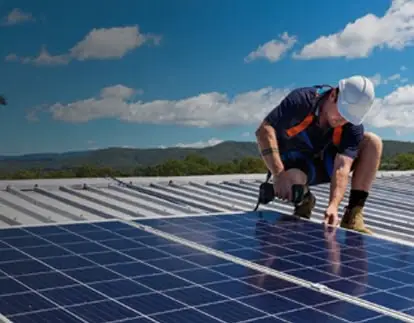
Solar Energy's Advantages
1. Find out about your solar power potential
Solar panels have many advantages, but the best thing about solar panels is the fact that it truly is renewable energy. It is readily accessible and usable throughout the world. Renewable radiation is different from other types of energy.
Renewable radiation should be available for as long as there’s sunlight. In the end, the sun will beam light for at least another 5 billion years.
2. Electricity bills have decreased.
Your electric bills will be reduced because you’ll be in a position to cover a part of your energy needs using the power generated by your solar system. The amount you can reduce your monthly bills is determined by the size of your solar system aswell in your electricity and heat consumption.
This transfer is extremely beneficial for companies that use advertisement solar panels because it could cover a significant part of your energy expenses.
You will also be able to save on your electricity bills and get payments from the Smart Export Guarantee (SEG) to pay for surplus energy that you sell to grid. You could generate more electricity than you use with your solar panel, provided that the system is connected electrically to the grid.
3. Diverse Applications
There are many uses of solar energy. Photovoltaics and solar thermal could be utilized to produce heat or electricity. Solar panels produce electricity in areas that do not have an electric grid, and also to extract water from areas with low clean water supplies as well as to power satellites from space.
You can integrate solar energy in building material. Sharp has introduced the transparent windows for solar power too long ago.
4. Low operating costs
Solar energy systems require very minimal maintenance. They require very little upkeep. They are cleaned only once a year. It is possible to count on the services of a specialist cleaning company, which can be found between PS25 as well as PS35.
There is no tear or wear due to the absence of mechanical components. The inverter converts the energy of the sun into heat and electricity continually. It is the most common element that must be changed every 5-10 years (solar thermal vs. PV). To ensure maximum efficiency, your solar power system will also require maintenance.
There is very little maintenance or repair costs after you’ve paid for the initial price for your solar system.
5. Technology Development
The technology used in the solar power industry is constantly improving and is expected to continue to advance. Quantum nanotechnology and physics are two of the most promising developments within the solar power sector. They can boost effectiveness of solar panel systems, and can even double or triple the electrical power input to the systems.
Solar Energy's Disadvantages
When the Sun shines solar panels generate the most electricity. They will not work as well in the event of cloudy weather. Since the sun’s rays shine directly onto the panels, solar panels perform best when they’re nearer than the Equator. It takes a lot of land for solar farms. The land can be used to create wildlife habitats or farms.
Solar panels aren’t able to convert sunlight to electricity very effectively. Solar panels are only about 20% efficient. This means that only 20 percent of the energy collected can be converted to electrical energy.
Although this is a step up from the results of ten previous years, it is not a guarantee that there are more positive developments in the coming years. The lab has achieved 47 percent efficiency and the field is currently at 40 percent. This is an encouraging indicator for the future of solar generating electricity.
1. Cost
A solar system may be expensive to purchase initially. The cost of the initial solar system purchase includes batteries, inverters, and inverters. However, solar prices are constantly changing, and it is safe that they will drop in the future.
2. Weather-Dependent
Even though solar energy can be collected even in rainy or cloudy days, the efficiency of solar panels decreases. To capture solar energy effectively solar panels require sunlight. A few rainy or cloudy days can effect on the energy system. Solar energy can be captured only at night.
Thermodynamic panels are an alternative if your system for water heating needs to be operational during the night or in winter.
3. It is the Cost of Solar Energy Storage is expensive
You can either use the solar energy immediately as well as store it into big batteries. These batteries can be used in solar systems that are off grid and are charged during the daytime to make the power available in the evening. While this is a fantastic way to use solar power throughout in the daylight, it can also cost quite a bit.
It is more efficient to use solar energy during daylight hours and{ to|| then} draw energy from the grid at night. However this can only be done in the event that your system is linked with the grid. Solar energy can be utilized to meet your energy needs This is the reason you will find that the energy consumption is greater during the day.
4. It uses a lot of space
You’ll need additional panels in order to generate more DC electricity. This is because you want to get as much sun as possible. Solar PV panels take up a lot of space, and not all roofs can allow the amount of panels you want.
You could also put the panel in the backyard of your home, but they must have sunlight. You may decide to put in smaller panels if you do not have enough space.
5. Pollution is often associated with it
Although solar energy is less polluting than other sources of energy, it still contributes to pollution. The emission of greenhouse gasses has been linked to installation and transportation of solar panels.
Certain toxic and hazardous substances are used to make solar photovoltaic devices. They can also affect the environment indirectly.
The Basic Solar Components
Understanding how solar panels are constructed is vital to comprehend how solar power works. Solar panels are created from silicon, one the most commonly used elements on the planet. But, it’s costly and challenging to make silicon crystals that are of the right quality. Solar panels for home use are typically made from the same, however, less efficient, components like copper, indium and gallium (CIGS). They can provide enough power for a a reasonable price.
A small amount of other elements can be introduced into silicon atoms during the manufacturing process to modify their electric properties. The strips are sandwiched between negatively (n) sort of silicon that includes an additional electron as well as an additional piece of positively (p-type)silicon that is deficient of one electron. This creates photovoltaic cell. When several photovoltaic cells are placed in a row under glass, they create typical solar panels.
Every solar panel has a conductive plate made of metal that is connected with wires that are connected to a fused combination unit. The energy generated by the array is transformed to alternating electricity using an inverter. The inverter transforms the initial direct electric current into the required power for human-made structures.
Turning Solar Power Into Electricity
The photons, which are invisibly formed particles which create visible sunlight. They are energy-rich, but have no rest mass. Photons collide with other particles, and their energy converts to different forms depending on the atoms they come into contact with. Most collisions produce heat.
However, electricity can be produced when photons trigger electrons in the atoms to be so excited that they release them and let them move around freely.
The possibility exists to maintain electrical imbalances due to the remarkable properties of semiconductors such as silicon. So long as photons strike the solar panels there will be an unending supply of electricity. The electricity is circulated around the system by wires that collect it.
Four Factors that Impact Solar Electricity Production
During and after installation of solar panels for residential use homeowners should be aware of these four important factors.
- Shade. Solar panels that are shaded won’t produce the same amount of energy like those that are exposed to direct sunlight. In the event that your rooftop is shaded un-trimmable trees or a structure, solar may not be the most suitable option.
- Seasonality. The production of solar energy is seasonal. A sunny day in summer will generate much more power than cloudy winter day. It is important to consider the whole year. Snow is a great way to reflect light and increase the efficiency of PV. In reality, a cold month can only be an antagonist to solar energy in the event that you cover your panels in snow.
- Tilt. Solar panels are not like a pinball machine. It is possible to tilt them. The efficiency of a residential solar system performs depends on the direction of your home, the position of your property and the slope of your roof. Solar panels must be set at the same angle as their latitude. Most situations work well with pitches between 30 and 45 degrees.
- Azimuth. The angle of solar azimuth is that the direction the sun’s orbit is taking. The sun’s light at noon is reflected from the northern hemisphere, in contrast to the south hemisphere. A solar panel’s output can be decreased by as much as 35% if it is not properly set. Zero azimuth (facing towards the equator) is the most effective alternative.
