
Solar Panels for Farmers
What is an Solar Farm?
A solar farm is a collection comprised of solar cells. The panels absorb solar energy and transform it into electricity. The electricity then goes to the grid for distribution and consumption. You’ll often see solar farms called photovoltaic power stations and solar parks. They’re usually erected on the ground and may be of any size.
Types of solar farms
There are tens of thousands upon tens of thousands solar installations across the [xfield_state-abbreviation] You can group them into two types: one based on their size.
- Utility-scale
- Community solar
Solar power for farmers
Solar panels could produce enough electricity to power your home, barn, and silos. This could lower your electricity cost. Any extra electricity that is returned to the grid might appear as a credit to your account.
It is possible to be skeptical when you learn of discounts of 51 percent off any item. Solar modules can be a good investment due to the simplicity of the calculations.
Rural Energy for America Program allows eligible farmers to receive up to 25 percent of the total costs of solar systems. Loan guarantees of up 75 percent of the total costs are available. These incentives can be a significant help for farmers who are paying to install solar panels. The benefits do not end there.
The federal tax credit5 for farmers{ of|| that is} up to 26 per cent is available for solar-related projects starting in 2020. In 2021, this credit will rise to 22 per cent. It is a good idea to know that the ITC can be used by home and business owners who want for a solar-powered future. The ITC is currently as 26%, both residential and commercial use, and a possible drop to 22% by 2022. In 2023, the residential and commercial ITC will decrease to 22%. Commercial will drop to 10%, and residential, to zero in 2024. There are many benefits of solar energy in 2020. The 25 percent grant combined with federal credit could mean that farmers could reduce their solar system costs by up to half.
These benefits are the base of a thriving energy future. Farmers may be qualified for benefits at the state level that can help them save money. The SRECs refer to solar renewable energy credits which can be awarded by states for every 1,000 kilowatts generated by solar energy. These credits are transferred to utility companies that purchase them in order to ensure that they meet renewable energy portfolio standards. This will save you money on your solar panels.
A Roof-mounted Solar PV system for Farms
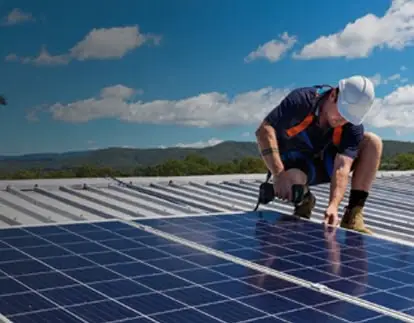
Numerous farms and businesses have roof-mounted solar PV systems. A typical agricultural structure is built with a pitch of 10 to 15 degrees on the roof. The roof produces significant amounts of power, even if it’s facing towards south.
Roofs of farm buildings can be used to create solar modules. They do not need approval for planning. Maintenance and servicing costs are too low once they’ve been set up. Solar energy isn’t just renewable, but it also provides long-term security from rising energy costs. This means that no greenhouse gasses are released, and no natural resources are depleted.
The environmental benefits of Farmers Going Solar
Going solar is not only an economical option to farmers. It also has many benefits for the environment. Your solar modules generate electricity without releasing carbon emissions which are detrimental to environmental benefits. This is in contrast utility companies that rely heavily on fossil fuels to produce the power they provide for their clients. Every year, thousands of tonnes of carbon dioxide is released into the atmosphere through the burning of coal and natural gas.
Farmers earn their livelihoods by harvesting the bounty of the Earth, which makes it easy to understand sustainability and environmental stewardship. Farmers who do not take care of their crops, their land or livestock will not continue to operate for very all the time. Set an example for the next generation by taking the necessary steps to care for the planet by installing solar.
Solar modules are the most recent cash crop that is hitting farm fields. Solar arrays are popping up everywhere{,|| across the country,} in all sizes and shapes. They range from small, local farms that provide lighting to communities, to massive commercial farms that supply electric power to thousands of homes.
Solar has seen an average of annual growth (49%) over the last decade. This growth can be attributed to the increasing number of solar farms that are being built across the [xfield_state-abbreviation], including [region], our own solar farm in [region].
There is plenty of solar power in the present to supply electricity to 15.7 million homes. Let’s discuss solar farms. We will be discussing the various types of farms and their specifics including cost, as well as power lines.
Agriculture and solar energy can be benefited from one another.
As the [xfield_state-abbreviation]’s eco-consumer rate rises, many industries are looking for ways to reduce their emissions. Innovations in technology are needed to improve the sustainability of agriculture, which is one of the biggest polluters. The environmentalists are looking at the{ potential|| possible} benefits of solar power for aiding farmers.
President Joe Biden’s Build Back Better plan is a strong endorsement of the connection between renewables, agriculture and other forms of energy. The Biden administration plans to achieve national carbon neutrality by 2040 through clean electricity. Solar modules can be erected by farmers in order to increase their food production and generate electricity that is emission-free.
Current estimates indicate that 80percent of the energy used in [the region] comes via fossil fuels. They release greenhouse gases to the atmosphere when they are burned.
These gasses change their composition in the atmosphere. To keep a certain temperature range, the planet depends on an air consistency that is able to produce as well as regulate temperature. The capacity of Earth to support life is impacted by changes in its structure.
Earth is a sponge for infrared light which produces heat and it warms the surface. The atmosphere absorbs more energy and sends it into space. The process is altered by greenhouse gasses, which boost the ratio of sun to heat in the atmosphere.
Emissions trap excess energy, and then filter it through heat production. The planet’s temperature rises over time as the gasses increase. These negative effects are reduced by solar energy that generates abundant energy and does not emit any carbon dioxide.
Agriculture is another element that can contribute to the increase in greenhouse effects. The amount of methane released into the atmosphere increases when cattle are raised. Methane is more damaging than carbon dioxide.
Exploiting natural resources or lands could also affect the the Earth’s ecosystem. In the case of overproduction, it results in excessive water use, erosion of soil, and a decrease in the soil’s nutrients. Solar panels can be used to cover huge areas of farms and water sources. This can boost the amount of renewable energy produced and assist in the conservation of agricultural land.
Covering low-light plants
As the global temperature rises, solar farmers find it challenging to cultivate many varieties that can withstand light and heat. To achieve optimal growth cycles the most popular vegetables like tomato, lettuces, squash, and spinach require shade. Solar panels can be utilized by farmers to shade light-shaded plants and improve their yields.
Agrivoltaics is a term which refers to the cultivation of crops using solar panels. It was developed by environmentalists. The panels shield crops from sunlight-related damage because the plants cool down the solar system by sweating. Overheating can result in a decline in the energy efficiency of renewable devices, therefore low-light crops are able to maintain their productivity.
Floatovoltaic-covered canals
Additionally, solar panel systems are employed by the agricultural sector to preserve natural resources. Agriculture requires large amounts of water. As global temperatures increase and the rate of evaporation increases, so too does the rate. This could lead to long-lasting droughts in some regions.
Scientists and environmental engineers came up with an eco-friendly solution: solar panels that are placed over canals. [location] agricultural professionals intend to put solar panels over the sources of water that feed [location’s] farms. The project could help save 65 billion gallons annually according to research.
Others have also developed floating photovoltaic panels, which can help shield water sources from the impacts from climate changes. The PV technology converts solar radiation into an electric current that is free from emission. Professionals refer to them as floatovoltaic systems because the panels can floating on the water surface.
The floatovoltaic panel could increase the efficiency of clean energy in the country and also the supply of freshwater for agriculture development. The industries can work together to reduce harmful environmental effects and boost conservation efforts.
The greenhouse effect may hinder the growth of farms due to animals overheating. Shade is crucial for livestock that graze, such as cattle and sheep. Panels of solar energy can be put up on farms to offer shelter to livestock.
Limitations on production
While solar panels might appear straightforward to use in agriculture-related businesses, many farmers aren’t keen on adopting this technology. Many farmers don’t believe that solar panels are suitable for use on their farms. They are too big and limit the production.
Others in rural areas see solar as a political statement. Research has shown that less Republican citizens support renewable sources systems due to their inability to understand their environmental impact.
What can [xfield_company] do to help farmers
Farming is no different from any other kind of business. It is essential to control expenses and market variables that could affect your farm. You’ll find it easier to connect with other businesses who have gone solar through [xfield_companyThe [xfield_company].
It’s not difficult to understand the reason why solar panel installations are a good choice for farmers. [xfield_company] is able to design the system that is right for you, regardless of how large or small your farm. This can help you lower your expenses while positively impacting your financial future and the natural environment. Solar panels are a rare product that has the potential to deliver such significant wins. To learn more about solar panels and find out whether solar panels are the right choice for you, call us.
