
Solar energy is a great way to save money.
Solar energy is a great way to save money.
Certain solar panels may be expensive to set up. Homeowners are left wondering, “Do solar panels save cost?” They are also environmentally friendly. Consider tax rebates and other incentives when comparing the savings and cost of solar panels. How much do solar panels cost? Continue reading to learn more.
Solar panels could save you approximately $2,000 per year.
A lot of people have heard about the incredible advantages of solar panels from relatives and friends or through online. One of the most significant benefits individuals mention is the reduction in monthly electric bills. How much can a household get by investing in solar panels at their home? We must know how much electricity is used each year in order to quantify the amount of money average homeowners save through the installation of solar panels. The United States, an average household utility user uses around 10694 kWh per year. This is a mean usage of 877 kWh each month. It is evident that a properly sized solar panel system can aid average homes throughout the United States save as much as $1,390.22 annually by multiplying $0.13 per kWh average national cost by 10,694kWh. This could save more than $115 per month.
What is the typical period of time to realize savings on energy bills with solar panels?
When a solar panel is fully operational, you might see savings on your monthly energy bill. It can take several years to fully recover your initial investment. If a household saves $1,390.22 annually on energy bills Then you could divide your investment in total by $1,390.22 and determine how long it takes to earn back your money. Anything that remains after the initial investment is recouped , will be a profit, less any repairs or maintenance costs for your solar system.
The national average cost of installing a 6-kilowatt solar panel electric system was $2.76 per Watt at July 2021. This means that the average cost of a 6-kilowatt installation is around $16,650. The total cost of the solar panel will be around $12,254 with the federal solar tax credit. The price for installing solar panels within your locale will be less if you are eligible for tax-free tax incentives from the states and municipalities. Divide the total cost in the amount of $12.254 divided by $1,390.22 yearly savings, and you will see that it takes just 9 years to see a return on your investment.
You should make sure that you are going to live in your home for at least a decade before installing solar panels. If not it will mean that the cost of the panels will be passed to the buyer. This could extend the time it takes to sell your home, depending on where you live or how popular solar power is in the area.
How do solar panels save the environment?
Cost savings are mostly influenced through the dimensions of the solar panels. The larger the solar system, the greater the savings. A large enough solar system can produce enough power enough to provide your entire house with sufficient energy. The surplus energy is then sold to the power company. Although large solar systems can provide substantial cost savings but it is crucial to remember that larger solar systems still have higher upfront cost.
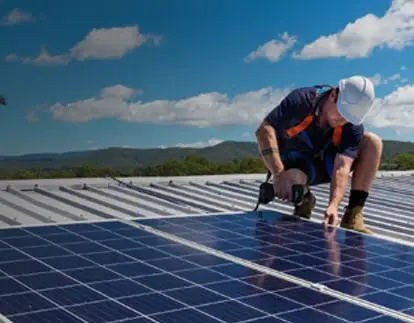
What is the cost for the installation of solar panels?
Following the tax credit, the median cost of the installation of solar panels for 2021 is $12,000. Installations of solar panels as little as $5,000 are available and larger ones with the most modern solar panels can cost $40,000 or higher.
What are the benefits from solar panel systems?
Solar panels have many benefits. Solar panels have many advantages that include a lower monthly electricity bill and lower maintenance expenses. They are also a renewable energy source that is helpful to our environment. These are only a few of the many reasons to get solar panels installed in your home.
It’s possible to cut down or even eliminate your monthly electric costs. This depends on how much your solar system can produce. You may be able trade excess electricity to some power companies when you generate more power than you need.
Solar panels require very little maintenance. The only required maintenance is to clean the panels twice each year and replace the inverter every five to 10 years. A lot of solar panel manufacturers offer warranties of 20-25 years.
There are numerous environmental advantages of solar panels. They can provide all the energy you require , without burning any fossil fuels such as oil, coal or natural gas. Solar energy is a great way to reduce carbon emissions and reduce the impact of climate change.
What are the cons to solar panels?
We have already discussed the advantages of solar panels. It is only right to mention the disadvantages. Solar panels have several negatives. They are expensive upfront and are weather dependent. They also consume a lot of space. Let’s review of these three main disadvantages.
Prices upfront costs of the inverterunit, solar panels, batteries, wiring and professional installation are not inexpensive. These expenses can be paid for by many people using the personal loan or home equity line of credit. It is crucial to keep in mind that you’ll eventually earn profits and recover 100 percent of your investment by reducing or completely eliminating your monthly electric bill.
Weather dependence: Your solar panels’ effectiveness is limited by weather. You may notice a significant change in your solar energy production even if you only have a few hours of peak sunshine hours.
It occupies a lot of space: If you are planning to build a huge solar array, your roof may not be large enough to accommodate all of the panels.
The initial cost is the biggest of these three main disadvantages. This will make it easier for more people to use solar technology as their energy source.
Tax credits are applicable to solar-powered panels?
Yes there is a solar tax credit. Solar Investment Tax Credit was introduced in the year 2006. In 2022 the ITC will provide an ITC rebate of 26 percent. The refund will be reduced to 22 percent in 2023.
Which states are the best in conserving money on solar panels?
Solar panels are a great way to save money and reduce your electric bill. The more electricity you use for each family member and the bigger your solar system larger, the more money you can save over the long run. It is possible in some areas to generate more solar energy than you need and transfer it over to the power company to make a small profit.
First, take a look at the electricity bill to figure out how much your household uses. Then, determine how much solar panels can save you each month. Next, multiply this number by the average electricity rate that your energy supplier charges you. You can determine the amount of electricity you’re paying for each month as well as annually. An average American household consumes approximately 10,649 kWh each year. As of December 2021, the average residential cost to power across the U.S. was $0.1331. This means that an average American household would spend approximately $1,417 for electricity in 2021. These calculations are solely based on the average national residential rates per kWh and energy use.
Some states and regions in the U.S. have electricity rates which are higher than the national average. If the weather is good solar panels are able to install in such states to save homeowners money and boost the return on investment.
Let’s take Hawaii as an example. The electricity rate average was $0.3276 per kWh at December 2021. A family living in Hawaii will consume approximately 10,649 kWh of electricity by 2021. It would be $3,488.61 annually. After taking advantage of the tax deduction for federal taxpayers, an array of 6-kilowatts of solar power costs around $11,837. The average Hawaiian family could reduce their annual energy costs by installing a solar panel. The solar system pay for itself in 3.5 years. A solar panel could also be used in other states with very low costs for electricity. It may take longer to earn a return on your initial investment8.
What are alternatives to solar panels
There are numerous solar options on the market. Solar lights, sun tunnels and solar shingles to provide power to your home.
[xfield_company] can be a great alternative to solar panels. It is possible to have renewable, clean energy without waiting for it to earn a profit.
For more information, visit our homepage and type in your address or ZIP Code. Connect your account to [xfield_companysupply plans for your area. This will allow you to receive steady and predictable monthly bills for energy.
Can a Home be Run with Solar Energy?
In actuality, it’s not always possible. It is because solar produces electricity when it is cloudy as well as at night. and it is not able to generate electricity at night. There are a few battery options available to provide power throughout these times, but they’re still expensive. Many homes that have solar panels still use the grid occasionally.
