
Benefits of Solar energy in homes
The benefits of solar power in homes
Solar power systems are an excellent option for homeowners who wish to lower their electric bills and reduce carbon footprints. This can also lead to greater home value. These advantages come with significant costs for maintenance and installation. The amount of gains will differ from one home to the next.
This article can assist homeowners in making the financial calculations needed to determine if solar energy is feasible for their home.
Understanding Solar Power System
It is easy to determine whether you install solar panels and if it is financially feasible for your home. Calculate:
- Cost of the solar power plant
- It will create a lot of energy
- You’d spend more money to get the same energy.
- How do you expect your upfront expenditure in savings on energy to be paid off?
- How long will it take in order for this system to be able to pay off its debts in five years?
If so and you’ve got the capital upfront then it’s probably a great idea. It is important to consider whether you’ll need to save{ more|| up} or borrow funds to finance the purchase.
But, in reality, things can be a bit more complicated. The factors that affect your solar panel can be very different and cause the benefits and costs from solar panels on two homes to be very different.
However, there are tools to help. [xfield_company] has an estimate calculator that can provide you with representative costs after you have installed solar power stations in every region of the U.S. This calculator is a great option to begin with when you’re just beginning to learn about solar energy or need to understand the basics of the cost-based model.
We’ll walk you through the most important aspects to consider when making a decision on the price and savings potential of solar energy for your home in the remainder in this post.
The Solar Power Costs for homeowners
Let’s first look at the initial cost of installing solar panels to your house. A residential solar panel system costs between $3,500 to $16,000 at the start.
The wide range of costs is why? The main reason is that the price of a system will differ based on its size and what type of panels it uses. No matter what system you choose, installing solar panels can be costly. The major expense associated with owning an array is the initial cost of purchasing the equipment. The largest component of overall cost will be that of the solar panel.
There might be additional charges. Inverters convert the electricity generated by the panel into alternating electricity utilized by home appliances, process used to determine (if required to gauge the amount of power that was produced) various housing components, cables, or wiring gear are all required to install. Many homeowners are considering the possibility of storing batteries. Batteries have historically been too expensive and unnecessary if the excess solar electricity generation is paid for by utilities. It is also important to take into account the cost of labor when installing batteries.
There are additional costs involved running and maintaining the PV array. Inverters and batteries, if any are required to be replaced after several years.
Subsidies
The above mentioned expenses are quite straightforward and a solar solar company can often offer a price for these for a householder, government and/or local electric assistance may be more difficult. Although incentives for solar installations change frequently and are not always clear, they are not a problem for the US government has already approved solar tax credits that can amount 30 percent of cost of the system.
The Database of State Incentives for Renewables & Efficiency website contains more details about incentive programs in the U.S., including programs in individual states. Similar information can be found on websites of solar advocacy or the government in other countries. Visit your local utility provider to find out if they offer financial incentives for solar installations and what their policies are regarding grid interconnection as well as selling power surplus into grid interconnection.
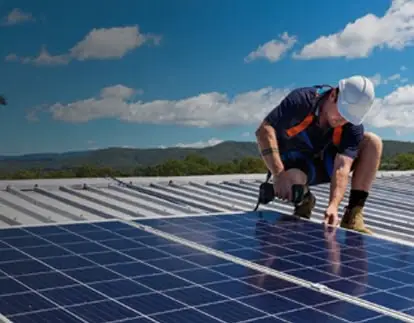
Calculating Your Energy Production
In your calculations the other factor that needs to consider is the amount of power your system produces. Even for experts the process can be a complicated calculation. Let’s go over the basics.
The levels of solar radiation in your home are an important consideration. This simply means the amount of sunlight you get. Although it is more beneficial to have solar panels close to the Equator, there are additional factors to consider. The National Renewable Energy Laboratory (NREL), which produces maps of all of the U.S. that show solar radiation levels and their website offers details on specific locations within the U.S.
The orientation of your home is also important. A roof that is south-facing and free of obstructions from trees or other structures to sunlight maximizes the energy of sunlight. The panels can also be erected on supports outside the house and then tucked far from the home. The installation will cost extra for hardware and cables.
The size of the system is also vital. The theoretical electrical output potential of a solar panel is expressed in Watts. The typical output of installed solar PV panels, which is also referred to by the term capacity factor, is between 15% to 30%.6 A home with a 3 kWh house system that operates at a capacity of 15% factor would produce approximately 3 kWh, which is 15 times 24 hours/day = 3,942kWh/year. It is approximately one-third of typical electricity consumption in the U.S.
How much can you save?
It is possible to estimate the amount of savings on energy each year by knowing upfront the amount the solar power plant will cost as well as the amount of energy it will generate.
This is a tough estimate because everything depends on the amount you are charged for electricity. Residential users are charged an annual fee for energy regardless of the time it is used. The solar energy system is employed to reduce the cost of electricity that homeowners pay, rather than compensating for the heavy price of electricity produced at peak times. This is more in line with the{ average|| typical} price of power generation.
A lot of U.S. utility companies have implemented pricing systems that permit homeowners to pay different rates during the day, to reflect the costs of electricity production. This is why there are higher rates for the afternoon and lower rates during the night. A location with this kind of variable rate could find it beneficial to install a solar PV array. Solar energy could help offset the most costly electric power.
It will be contingent on the frequency of rate changes in the scheme and the timing of them. Similar pricing schemes are used by utilities in specific regions. The rates may vary according to seasonal demand fluctuations. Solar energy is more expensive if it is able to offer higher rates during summer.
These plans can be employed in some utility companies to alter the cost of electricity as consumption increases. This allows the advantages of solar systems to depend on the amount of electricity is used. In certain regions, prices rise dramatically as consumers consume more. Large homes with large energy requirements may be most likely to require solar panels to offset costs of consumption.
It could be possible for some homes to sell solar power back into the grid to save cash. This is known as net-metering across the United States. Residential consumers make use of the electricity they produce by solar panels to offset power consumption elsewhere. Monthly electric bills are a measurement of the amount of energy consumed. There are different rules and regulations pertaining to net metering that apply to each region. For more information homeowners should look up the DSIRE database. They should also contact the local utility.
Calculating Solar Power Costs
Now you’ll be able to calculate the final value and evaluate the value of solar power for you.
You can use Discounted Cash Flow (DCF) to determine the total cost and advantages of a solar installation. The outflows at the start of the project would comprise the initial installation costs, without subsidies. Inflows would follow later in the form of offset cost of electricity (both direct and via net metering).
Instead of making use of DCF Solar power’s viability is often determined by calculating its levelized costs of power (LCOE) and comparing that to the electricity price charged by the local utility. The cost per kilowatt hour (or C//kWh) will be used to calculate the LCOE of solar panels for the home. This is the same format as electricity bills. The following equation could be used to approximate the LCOE:
LCOE ($/kWh), is the Net Present Value (NPV) of the Lifetime Cost of Owning ($)/Lifetime Energy Output ($kWh).
The useful life span is typically 25 to 40 years.7 To determine the NPV, it should also be included in the maintenance cost. The LCOE is a measure of the cost of electricity supplied by a utility. Remember, the relevant price is the one that happens when solar power production is at its highest.
Is Solar Power Worth It?
When you’ve finished all these calculations after which you’ll likely be left with one number which is the time it takes for a solar system to pay back your energy costs. You may be able to see an array of systems that reach this point in the span of five to ten years, if you live in a sun-drenched part of the country, with high utility bills. Others may need to wait 10 to 20 years before they reach this level.
The fact is that most homeowners will realize the advantages of a solar energy system at some point. It might take years to realize this benefit. It’s usually a matter of whether it’s worth it to invest in a system of this kind. This is determined by how long you plan to stay at your residence, the types of subsidies offered, and whether or not you’re concerned about the environment.
The pros and cons to solar panel systems for homes
Like all things has its pros and drawbacks. But, you might find that some of the costs can be offset by the environmental benefits and a lower carbon footprint. This is more crucial than an evaluation purely based on financials.
Solar Energy Pros
- You can lower your carbon footprint by using green energy sources
- You can sell excess energy that you’ve produced using net metering
- Certain tax credits from the federal government could be for you
Solar Energy Cons
- The cost of maintenance and installation is still extremely expensive.
- Solar only works when there is sun
- Every few years, the components of the system have to be replaced
- Some tax breaks might be overdue or about to expire
Can a home be run by solar power by itself?
It’s rare to find it. Solar power only operates when there is light. If it’s cloudy or dark, solar doesn’t produce electricity. While there are battery options that can provide power at these conditions, they tend to be expensive. The grid is still used by the majority of homes that have solar panels.
Are Solar Panels Really Worth It?
It is possible for the system to repay its expenses in the future, based on the location you reside in. Since you don’t need to pay the same amount for electric power from your utility company This is a possibility. There could be a decrease in your monthly bills when net metering is activated.
What is the cost of the Solar Panel?
The prices have fallen steadily throughout the time. The output power of your solar array will determine the total cost. Consumer reports show that the cost associated with a solar system for an average-sized home in the U.S. ranges between $11,000 to $15,000.8
What is the timeline to recoup the initial cost?
It can take anywhere from 10 to 20 years to make a solar panel pay for itself depending on the size and position of your house.
