
Solar Panels for Farmers
What is an Solar Farm?
Solar farms are a group comprised of solar cells. These panels absorb solar energy and convert it into electricity. The electricity then goes to the grid to be distributed and consumed. You’ll often see solar farms called photovoltaic power stations or solar parks. They are typically mounted on the ground, but they can be of any size.
Different types of solar farms
There are tens of thousands upon tens of thousands solar installations across the [xfield_state-abbreviation] You can group them into two types: one based on their size.
- Utility-scale
- Community solar
Renewable energy for farms
Your solar modules could generate enough energy to power your home, barn, and silos. This could lower your electricity cost. Any excess electricity returned to the grid could be credited on your bill.
It’s possible that you are doubtful when you hear about the offer of a discount of 51 percent on any item. Solar modules are an attractive investment due to the simplicity of the math.
Rural Energy for America Program allows eligible farmers to receive up to 25% of the total costs for solar-powered projects. Guarantees for loans up to 75% of total costs are available. These incentives can provide a huge benefit to farmers who are paying for solar panels. The benefits do not end at that point.
The federal tax credit5 available to farmers{ of|| that is} up to 26 percent is available for solar-related projects beginning in 2020. In 2021, the credit will be increased to 22 percent. It is a good idea to know that the ITC is available to home and business owners who are planning for a solar-powered future. The ITC currently stands at 26% for residential and commercial use, and the possibility of dropping to 22% by 2022. In 2023, residential as well as commercial ITC will drop to 22 percent. Commercial will drop to 10% and residential will be zero by 2024. There are many benefits of going solar in 2020. The grant of 25 percent combined with the federal credits could result in farmers reducing their solar costs by as much as half.
These benefits are the foundation of a thriving energy future. Farmers may also be entitled to state-level benefits which could help them save money. These are credits for solar energy which can be earned through states with every one thousand kilowatts in solar power. These credits are offered to utilities who purchase them to meet the standards of renewable energy portfolios. This will help you save the cost of your solar panels.
Systems for Roof mounted solar PV for Farms
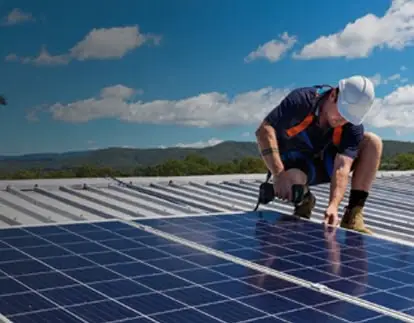
Numerous farms and businesses be equipped with solar PV roof systems. A typical agricultural structure has a pitch of 10-15 degrees on the roof. The roof produces massive amounts of power even if it’s facing to the south.
Roofs on farm buildings are able to be used as solar modules. They don’t require permission for development. Costs for maintenance and service are as low after they’ve been set up. Solar energy is not just renewable, but it also provides long-term security against increasing energy costs. It means no greenhouse gasses are released, and there is no natural resources are drained.
The environmental benefits of Farmers Going Solar
Going solar isn’t just an economical option that farmers can take advantage of, it also offers many advantages for the ecological environment. Your solar modules generate electricity without producing carbon emissions that are harmful to the environment. This is in contrast utility companies that depend heavily upon fossil fuels to generate the power they provide for their clients. Each year, thousands of tonnes of carbon dioxide are released into the air from the burning of coal and natural gas.
Farmers make their living from the bounty of the Earth This is easy to comprehend sustainability and environmental management. Farmers who don’t care about their agricultural land, crops or livestock won’t remain in business for long. Set an example for the future generation by taking action to protect the environment by installing solar.
Solar panels are among the latest cash crop that is hitting farm fields. Solar arrays are appearing everywhere{,|| across the country,} in all shapes and sizes. They vary from small, local farms that supply illumination to the communities, to massive utilitarian-scale farms that provide electric power to thousands of households.
Solar has witnessed an average annual growth rate (49 percent) in the past decade. This growth can be attributed to the increasing number of solar farms that are being built across the [xfield_state-abbreviation], including [region], our own solar farm in [region].
There is sufficient solar power in the present to provide power to 15.7 million homes. Let’s talk about solar farms. We’ll discuss the various types of farms and their specifics, such as cost and power lines.
Agriculture and solar energy can be benefited from one another.
As the [xfield_state-abbreviation]’s eco-consumer rate rises, many industries are looking for ways to reduce their emissions. Technologies advancements are required to improve the sustainability of agriculture, which is a major polluter. The environmentalists are looking at the{ potential|| possible} advantages of solar power in aiding farmers.
Vice President Biden’s Build Back Better plan supports the link between renewable energy as well as agriculture and other forms of energy. Biden’s administration is planning to achieve zero carbon emissions by the year 2040 using green electricity. Solar modules can be installed by farmers to increase their food production and generate electricity that is emissions-free.
The current estimates suggest that 80percent of the energy used in [the region] is derived through fossil fuels. The elements release greenhouse gases to the atmosphere when they are burned.
The gasses alter how the air is composed. air. To keep a certain temperature range, the earth relies on an atmosphere that is able to produce and regulate temperatures. The capacity of Earth to sustain life is affected by changes in its composition.
Earth is a sponge for infrared light which produces heat and it warms the surface. The atmosphere absorbs more energy before sending it out into space. The process is influenced by greenhouse gases that boost the ratio of sun to heat in the atmosphere.
Emissions trap excess energy and refilter it by producing heat. The temperature of the planet increases over time as the gasses accumulate. These negative effects are reduced by solar power, which produces abundant energy without emitting any emissions.
Agricultural processes are another factor that contribute to the increased greenhouse effect. The quantity of methane released into the atmosphere is increased by raising cattle. Methane is more dangerous than carbon dioxide.
Exploiting natural resources and lands could also affect the earth’s ecological balance. The overproduction of crops leads to excessive water use, soil erosion, and the depletion of the soil’s nutrient level. Solar panels are a great option to cover large areas of farms and water sources. This will increase the production of renewable energy and aid to conserve agricultural land.
Covering plants with low-light
As the global temperature rises solar farmers are finding it challenging to cultivate many varieties that can withstand light and heat. To achieve optimal growth cycles, high-demand vegetables such as tomato, lettuces, spinach, and squash need shade. Solar panels are used for farmers in order to cover plants and improve the yields of these plants.
Agrivoltaics is a term that refers to farming with solar panels. It was created by environmentalists. The panels shield crops from sunlight-related damage because they cool the solar system by sweating. Overheating can cause a decrease in the efficiency of energy produced by renewable devices, therefore plants with low light levels are able to maintain their productivity.
Floatovoltaic-covered canals
Additionally, solar panel systems are used by the agricultural industry to preserve natural resources. Agriculture demands a lot of water. As global temperatures increase, so does the evaporation rate. This can lead to prolonged droughts in some regions.
Environmental engineers and scientists came up with an environmentally sustainable solution: panels placed on canals. [location] agricultural professionals intend to build solar panels on water sources that support [location]’s farms. The project could help save 65 billion gallons annually, according to researchers.
Others have also developed floating photovoltaic panels, which help protect water supplies from the impacts of climate change. Photovoltaic technology turns solar energy into an electric current that is free from emission. Professionals refer to them as floatovoltaic systems due to the fact that the panels can be flounder on water surfaces.
The floatovoltaic panel could increase the efficiency of clean energy in the country as well as the availability of freshwater for agriculture development. Industry partners can collaborate to lessen harmful environmental effects and enhance conservation efforts.
The greenhouse effect can affect the production of agricultural businesses due to animals that are overheated. Shade is essential for animals that graze, such as sheep and cattle. The solar panels are erected on farms to give shelter to their livestock.
Production limitations
Although solar panels appear straightforward to use in agriculture-related businesses, many farmers are hesitant to use this method of production. Many farmers don’t believe that solar panels can be utilized on their fields. They are too big and limit the production.
Others in rural areas see solar as a way to make a statement about politics. Research has shown that less Republican residents support renewable energy systems due to their inability to understand their environmental impact.
What can [xfield_company] do to help farmers?
It is just like any other business. It’s important to be aware of expenses and market variables that could affect your farm. You’ll find it easier to work with businesses who have gone solar via [xfield_companyThe [xfield_company].
It’s easy to see why solar panel installation is an ideal option for farmers. [xfield_company] can create the system that is right for you, no matter how large or small your farm. This can help you lower your expenses while positively impacting your financial future as well as the planet. Solar panels are a rare product that has the potential to deliver such significant wins. For more details and to determine whether solar panels are the right choice for you, please call us.
